














































FSC FCOC47059 . FSC is dedicated to the promotion of responsible forest management
worldwide. By selecting this product, you help take care of the woorld's forests

UL-certified for indoor drying environments not directly exposed to excessive moisture or water;
Use in the United States and Canada.

Certified to Dry ETL electrical standard: suitable for use indoors in dry locations not directly exposed to excessive moisture and water
Use in the United States

CE-certified drying equipment compliant with electrical standards: Suitable for indoor drying environments not directly exposed to excessive moisture or water;
Tested for use in Europe, the UK, and other regions.


The support center has answers to questions you may have. You can also contact customer service in the support center if you can't find what you're looking for.
Support Center >
At houlte, we are committed to delivering quality, style, and great value to our customers. Our goal is to simplify your shopping experience by providing competitive prices and exceptional service.

If an item you purchased from houlte goes on sale on our website within 30 days of your purchase date, you may request a price match. This policy ensures you always receive the best value when shopping with us.
Houlte reserves the right to interpret and adjust the terms of the Price Match Policy as necessary.
Houlte has partnered with Taskrabbit to make your everyday life at home easier by connecting you with flexible and affordable ways to get your to-do’s done including furniture assembly and mounting.

1. Purchase your furniture at Houlte.
2. Check your order Dispatched and Delivered email and click the
Houlte link. You will be redirected to Taskrabbit's landing page.
3. Post your task on Taskrabbit platform.
4. Pick the best tasker to assemble your furniture.
Houlte has partnered with Taskrabbit to make your everyday life at home easier by connecting you with flexible and affordable ways to get your to-do’s done including furniture assembly and mounting.
Taskrabbit Assembly is available in most metro areas in the US. The availability of Taskers varies based on demand. When placing an order on Taskrabbit, you will need to enter your zip code. If the service is not supported in your area, you will not be able to place an order.
You can book assembly for your Houlte furniture as early as the next day after your delivery, and up to 14 days in advance, giving you flexibility to choose a time that works best for you.

Ready to use out of the box; minimal installation may be required (e.g., handles).

Main structure is pre-built; minor components require attachment (e.g., legs).

Assembly required; multiple parts must be assembled before use.
Our furniture is built with a combination of core boards, real wood veneers, and selected solid wood parts. Each material is used for a different purpose—structure, surface appearance, or visible strength—so the final piece feels balanced in performance, finish, and cost.
Core boards form the internal foundation of the furniture. They provide structure, stability, and efficiency across large surfaces and cabinet bodies.

Stable structural board

Smooth and consistent

Functional internal board
Selected solid wood parts are used where visible strength, tactile quality, and structural integrity matter most—such as legs, frames, trim, and exposed support details.

Durable and classic

Light and versatile

Premium and elevated
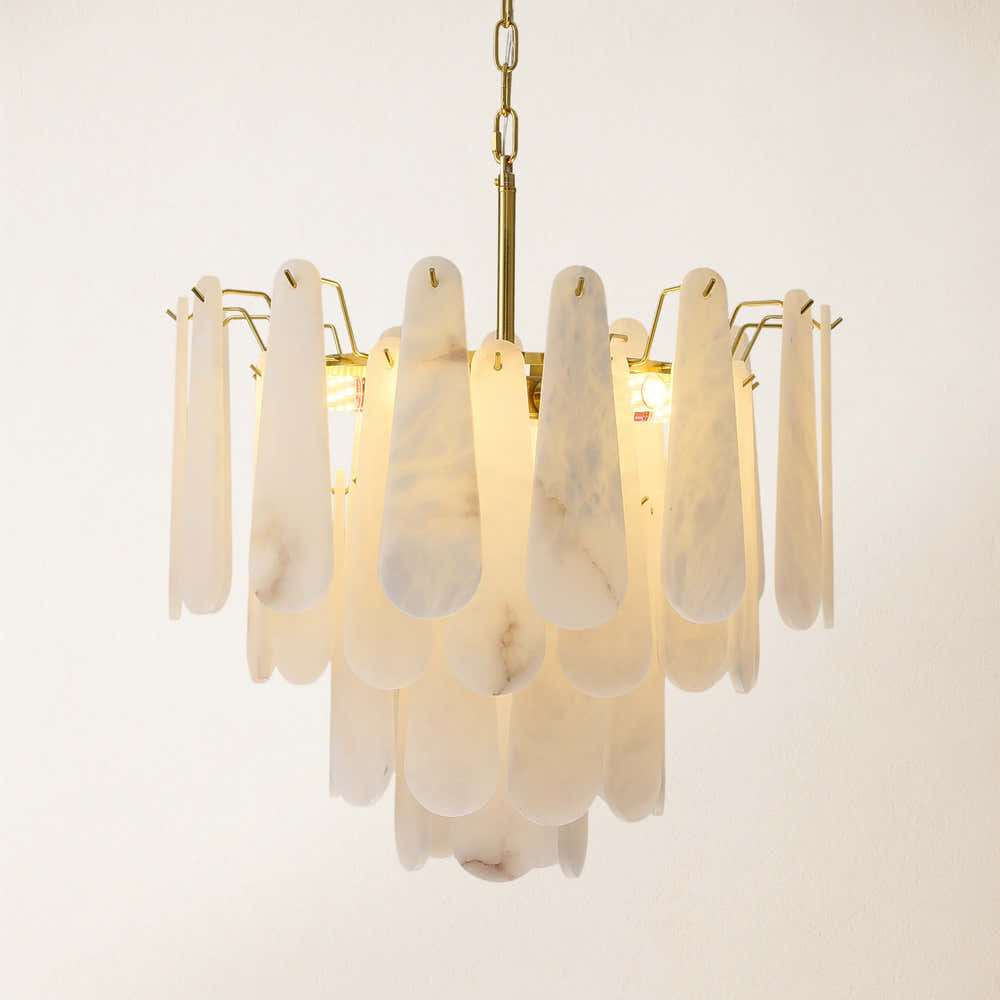
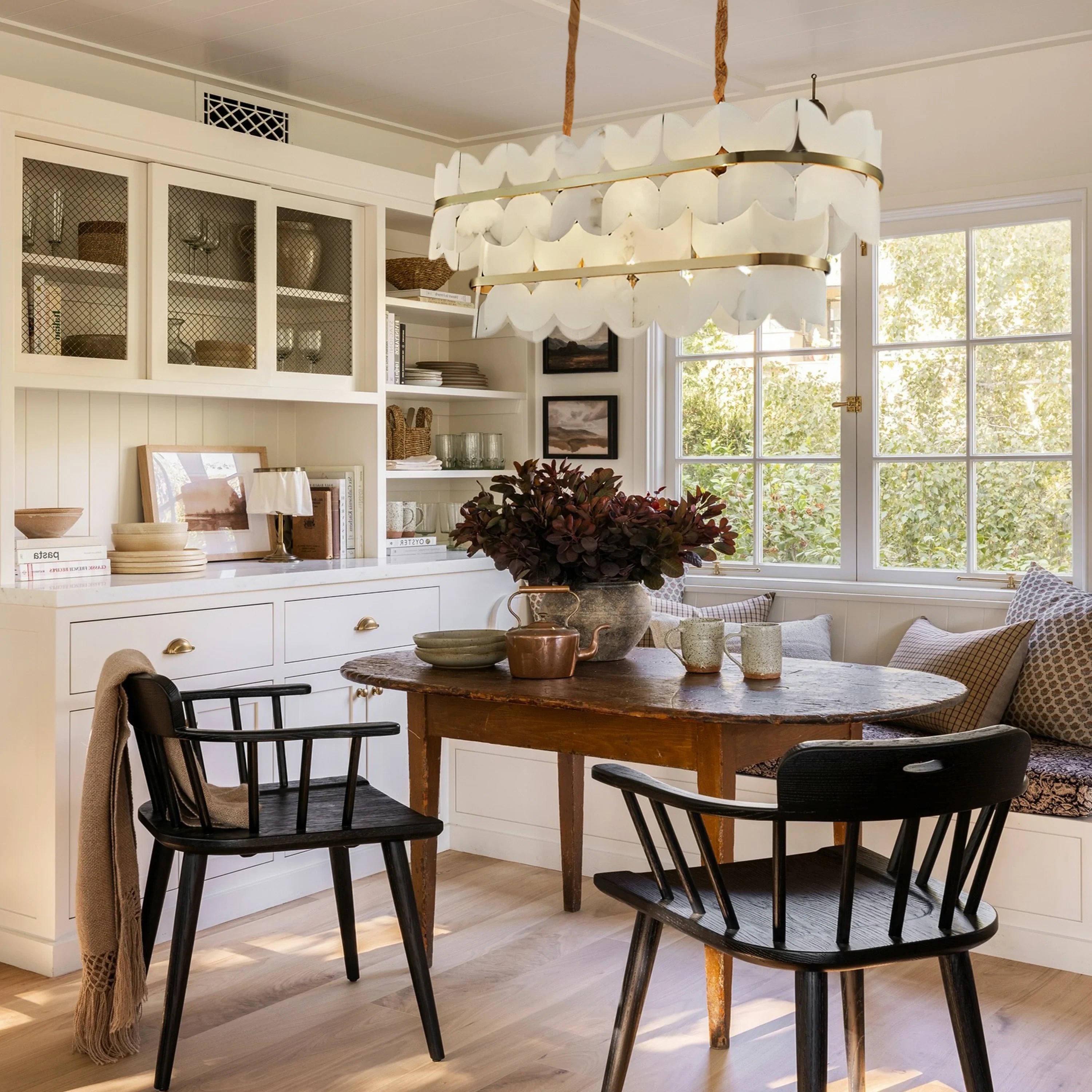
In the symphony of interior design, lighting is the conductor. It sets the tempo, directs the mood, and highlights the most important elements of the composition. But even the most exquisite instrument—like a handcrafted alabaster chandelier from Houlte—cannot perform its best if it is positioned incorrectly.
One of the most frequent questions we receive at the Houlte design desk is deceptively simple: "How high should I hang my chandelier above the dining table?"
While a quick Google search might give you a generic number, the true answer lies in the nuance. It involves ceiling height, table size, fixture shape, and the elusive feeling of "atmosphere" that we at Houlte cherish so deeply. A chandelier hung too high feels detached and cold, leaving the diners exposed. Hung too low, it becomes an obstruction, severing the visual connection across the table.
In this comprehensive guide, we will move beyond the basic rules of thumb. We will explore the art and science of suspension, ensuring that your dining room becomes not just a place to eat, but a sanctuary of comfort, beauty, and harmony.

Before we break the rules, we must understand them. For decades, interior designers and architects have relied on a standard range of measurements that work for 90% of homes.
The nearly universal standard for hanging a chandelier above a dining table is: The bottom of the fixture should sit between 30 and 36 inches above the surface of the table.
Why this specific range?
This 30-to-36 inch rule assumes you have a standard 8-foot ceiling. This is where many homeowners get stuck. They follow the rule blindly, even when their architecture demands something different.
Modern homes rarely stick to standard dimensions. From soaring double-height dining rooms to cozy, low-ceilinged breakfast nooks, your specific architecture dictates the need for adjustment.
If you are blessed with ceilings higher than 8 feet, the "30-to-36 inch" rule will make your chandelier look like it is floating too low, leaving a massive, awkward gap of negative space between the fixture and the ceiling.
The Adjustment: For every foot of ceiling height above 8 feet, add 3 inches to the suspension height.
Let’s calculate this for a 10-foot ceiling:
Why this works: Raising the fixture slightly maintains the proportion with the room's volume while still keeping the light connected to the table.
Cathedral or vaulted ceilings add grandeur but complicate installation.
At Houlte, we design utilizing materials that have presence—natural Spanish alabaster, rich metals, and architectural forms. The physical design of the light changes how "heavy" or "light" it feels in a room, which influences hanging height.
Your table is the stage; the chandelier is the spotlight. The relationship between the two must be harmonious.
A chandelier should never be wider than the table itself. If it extends beyond the table edges, guests risk bumping their heads when standing up or sitting down.
The Golden Ratio: The diameter (or width) of your chandelier should be one-half to two-thirds the width of your dining table.
For long, rectangular tables (8 feet or longer), a single small chandelier often looks lost and provides uneven lighting (bright in the center, dark at the ends).
While math and rules are helpful foundations, at Houlte, we believe design is ultimately about feeling. How you live in your home should dictate the final adjustment.
Do you keep a tall floral arrangement or a sculptural vase on your dining table year-round? If so, you must account for this. Hanging a chandelier at 30 inches might collide with your favorite centerpiece. Measure your typical decor height and ensure there is at least a few inches of clearance between the flowers and the lowest crystal or stone.
Does your dining room have a spectacular view out of a picture window? Or perhaps a piece of statement art on the wall? Stand back and assess the sightlines. If the chandelier at 30 inches blocks the best view in the house, raise it to 36 or 38 inches. The view is part of the room’s soul; don’t obstruct it.
This is a practical, often overlooked tip. If the primary members of your household are exceptionally tall (over 6'2"), a fixture hanging at 30 inches might feel uncomfortably close to their forehead when they lean in. In these cases, cheat the height up by 2-3 inches. Comfort is the ultimate luxury.
You’ve done the math, you’ve chosen the height. Now, how do you execute it flawlessly?
Before you drill any holes or cut any wires, do a mock-up.
Once you have the perfect height, you need the perfect intensity. A chandelier hanging at eye level (even 30 inches above the table) can be blinding at full brightness.
Don't rely on the chandelier alone. Even at the perfect height, a single light source can create shadows. Complement your Houlte chandelier with sconces or recessed lighting on the periphery of the room. This balances the light levels and reduces eye strain.
To help you visualize these rules in action, here are specific recommendations from the Houlte catalog, tailored for dining perfection.

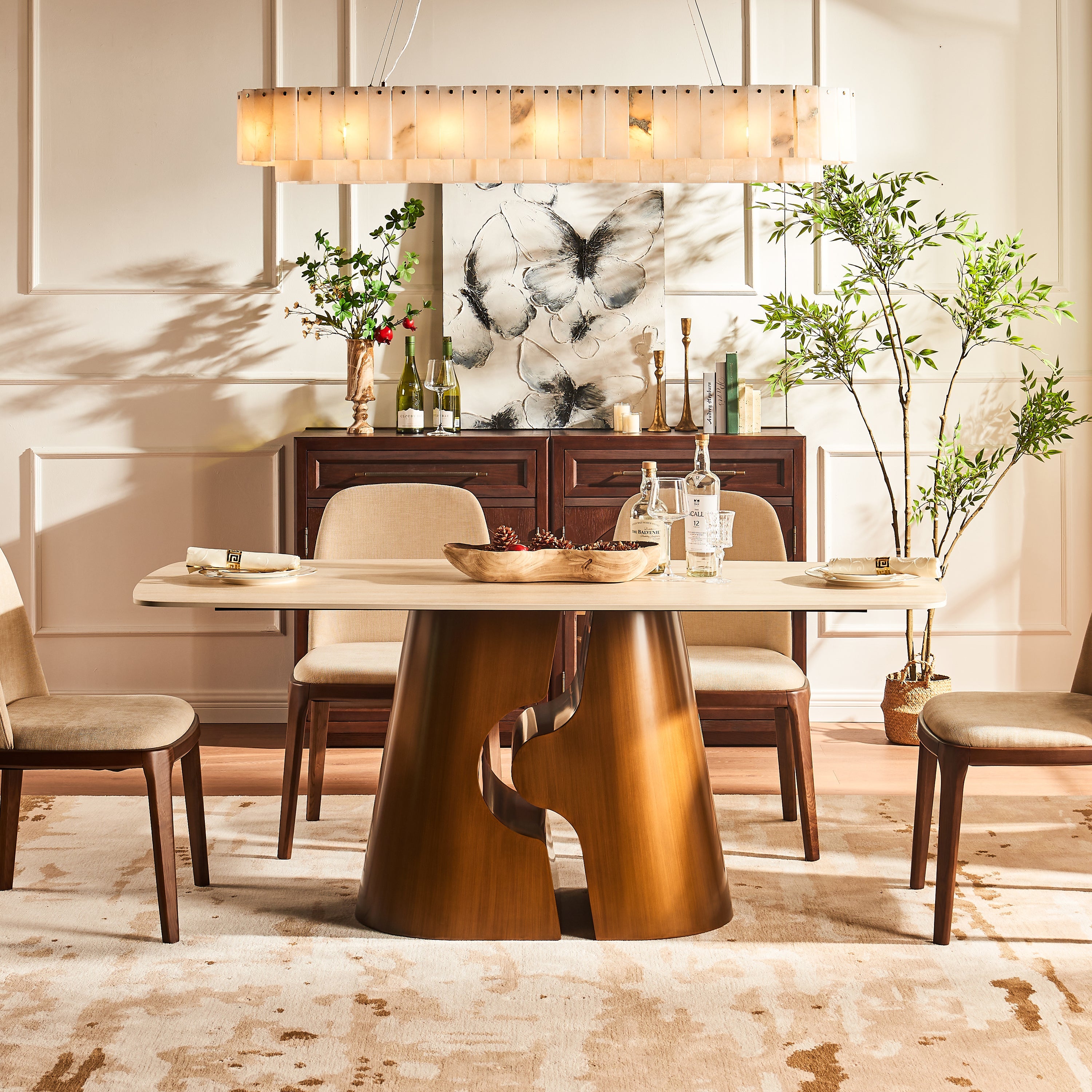
The Sawyer Alabaster Rectangle Chandelier (54"L)

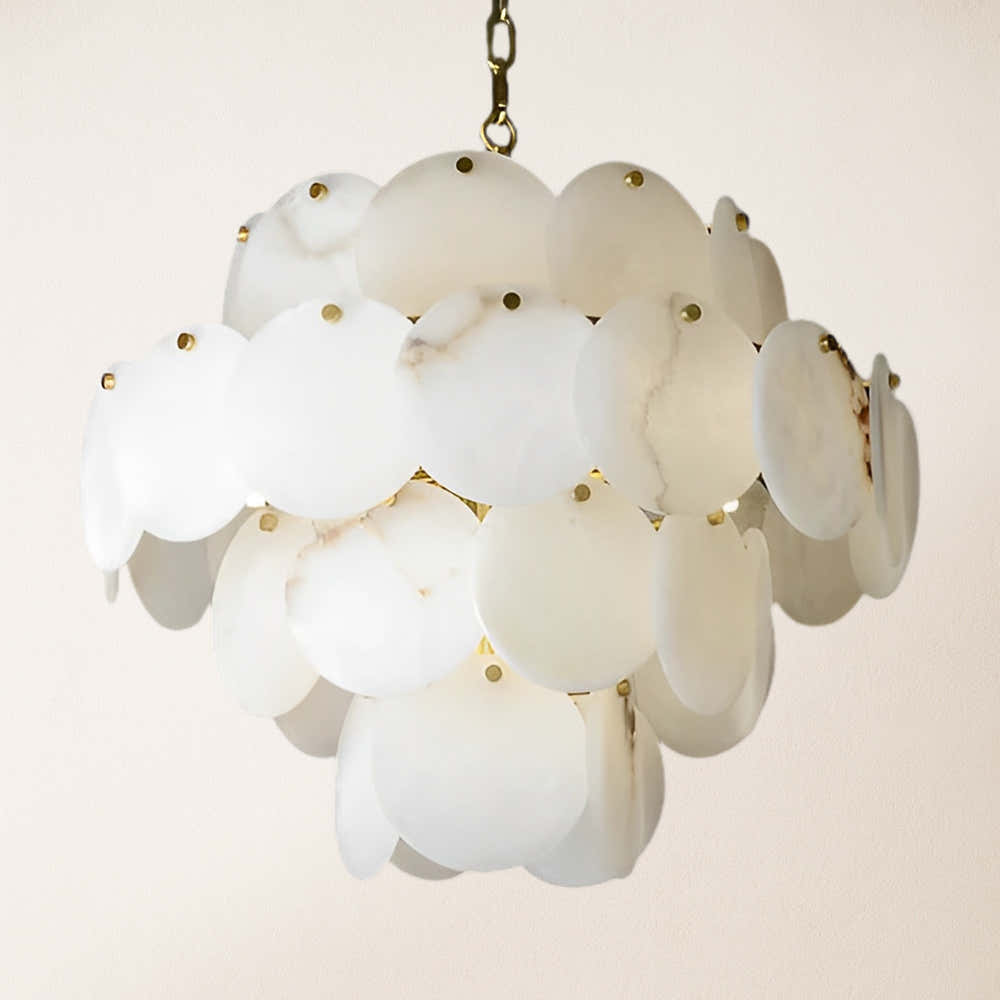
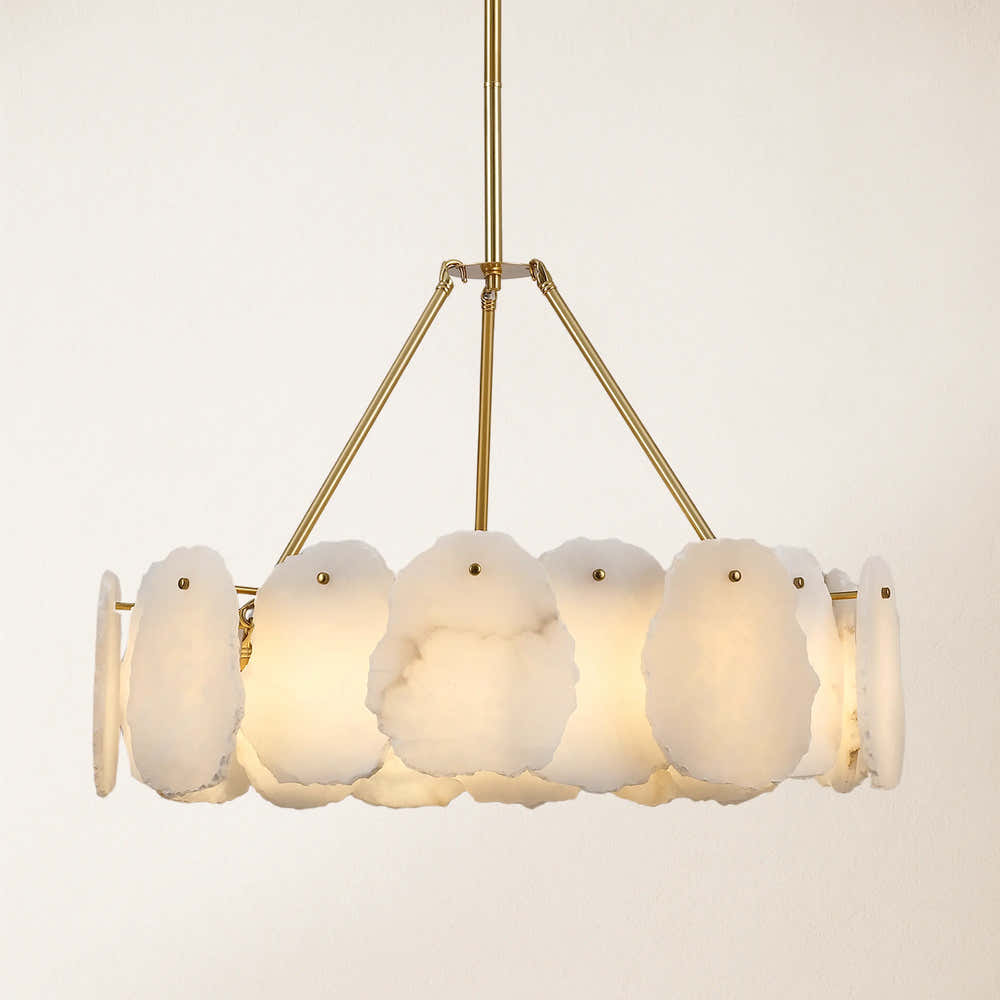
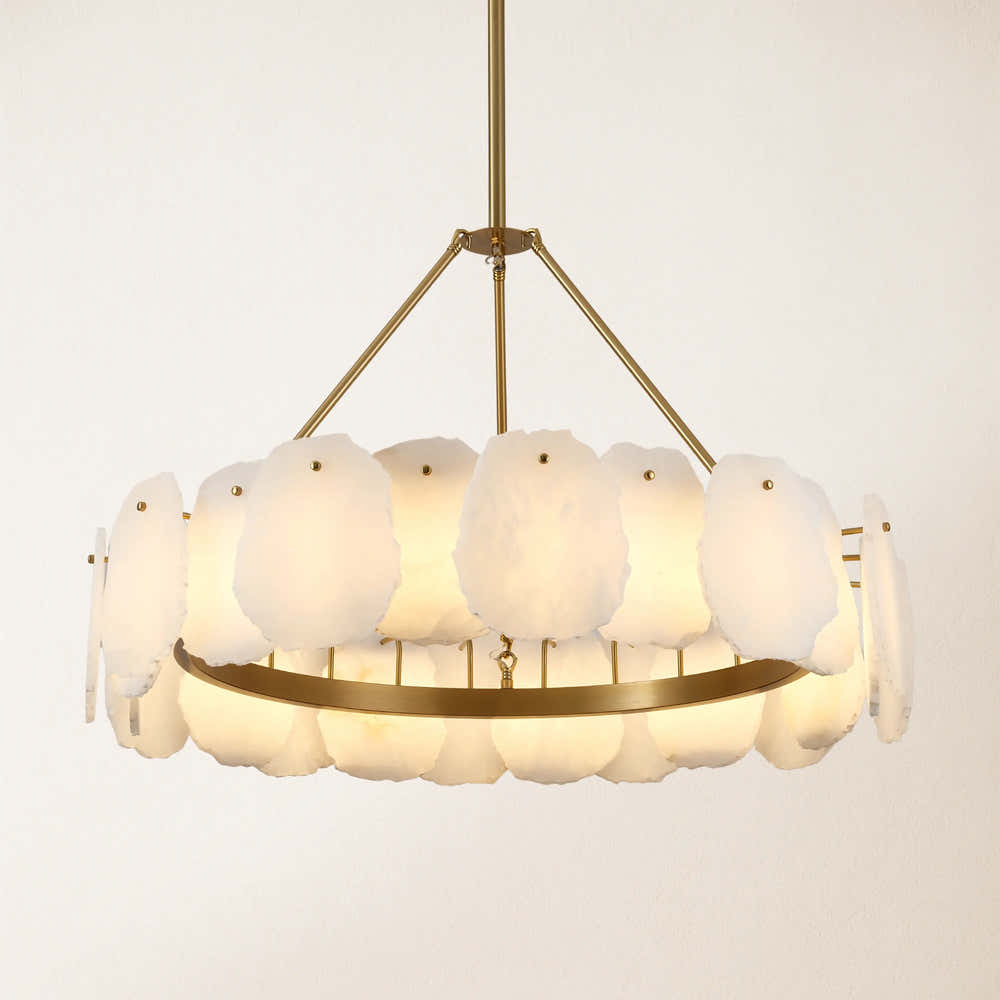
The Moira Alabaster Round Chandelier (24"D)
Correctly hanging a chandelier is about respecting the relationship between the architecture, the furniture, and the people who inhabit the space. It is the difference between a room that feels "furnished" and a room that feels "designed."
At Houlte, our mission is to bring that sense of professional design and emotional comfort into your home. We craft our lights to be beautiful objects, but it is your installation that turns them into an experience.
Take the tape measure out. Do the math. But ultimately, trust your eye and the feeling of the room.
Ready to find the centerpiece your dining room deserves? Explore our collection of hand-finished, natural alabaster lighting and discover the glow that transforms a house into a home.


Share:
Can I Hang a 13.7" Chandelier in a 15.25' Area?
The Ultimate Guide to Cleaning Every Type of Chandelier