














































FSC FCOC47059 . FSC is dedicated to the promotion of responsible forest management
worldwide. By selecting this product, you help take care of the woorld's forests

UL-certified for indoor drying environments not directly exposed to excessive moisture or water;
Use in the United States and Canada.

Certified to Dry ETL electrical standard: suitable for use indoors in dry locations not directly exposed to excessive moisture and water
Use in the United States

CE-certified drying equipment compliant with electrical standards: Suitable for indoor drying environments not directly exposed to excessive moisture or water;
Tested for use in Europe, the UK, and other regions.


The support center has answers to questions you may have. You can also contact customer service in the support center if you can't find what you're looking for.
Support Center >
At houlte, we are committed to delivering quality, style, and great value to our customers. Our goal is to simplify your shopping experience by providing competitive prices and exceptional service.

If an item you purchased from houlte goes on sale on our website within 30 days of your purchase date, you may request a price match. This policy ensures you always receive the best value when shopping with us.
Houlte reserves the right to interpret and adjust the terms of the Price Match Policy as necessary.
Houlte has partnered with Taskrabbit to make your everyday life at home easier by connecting you with flexible and affordable ways to get your to-do’s done including furniture assembly and mounting.

1. Purchase your furniture at Houlte.
2. Check your order Dispatched and Delivered email and click the
Houlte link. You will be redirected to Taskrabbit's landing page.
3. Post your task on Taskrabbit platform.
4. Pick the best tasker to assemble your furniture.
Houlte has partnered with Taskrabbit to make your everyday life at home easier by connecting you with flexible and affordable ways to get your to-do’s done including furniture assembly and mounting.
Taskrabbit Assembly is available in most metro areas in the US. The availability of Taskers varies based on demand. When placing an order on Taskrabbit, you will need to enter your zip code. If the service is not supported in your area, you will not be able to place an order.
You can book assembly for your Houlte furniture as early as the next day after your delivery, and up to 14 days in advance, giving you flexibility to choose a time that works best for you.

Ready to use out of the box; minimal installation may be required (e.g., handles).

Main structure is pre-built; minor components require attachment (e.g., legs).

Assembly required; multiple parts must be assembled before use.
Our furniture is built with a combination of core boards, real wood veneers, and selected solid wood parts. Each material is used for a different purpose—structure, surface appearance, or visible strength—so the final piece feels balanced in performance, finish, and cost.
Core boards form the internal foundation of the furniture. They provide structure, stability, and efficiency across large surfaces and cabinet bodies.

Stable structural board

Smooth and consistent

Functional internal board
Selected solid wood parts are used where visible strength, tactile quality, and structural integrity matter most—such as legs, frames, trim, and exposed support details.

Durable and classic

Light and versatile

Premium and elevated
In an open-concept home, the dining table does more than host meals. It defines a zone, creates visual rhythm, and helps the kitchen, living room, and dining area feel connected without blending into one unfinished space.
Open-concept homes are beautiful because they feel spacious and connected. But that openness also creates a design challenge: without walls, each area needs furniture to create boundaries. The dining table often becomes one of the most important anchors in the entire floor plan.
A good dining table should make the dining area feel intentional without interrupting the view between the kitchen and living room. It should have enough scale to hold the space, enough beauty to be seen from every angle, and enough practicality for everyday life.
Think of the dining table as the architectural center of the open plan.
It should help the room feel organized, not crowded.
In a closed dining room, walls help define the area. In an open-concept home, the table has to do more of that work on its own. A table that is too small may look like it is floating between the kitchen and sofa. A table that is too large can interrupt the natural path through the home.
The right scale depends on the width of the dining zone, the size of the kitchen island, and the distance to the living area. A large rectangular table can create a strong visual boundary, while a round table can make a smaller open corner feel more fluid.
A larger table can help the dining area feel like its own room, even without walls.
The table should not block the path between kitchen, dining, and living areas.
If the kitchen island is long and linear, the dining table should feel balanced beside it.
Shape matters even more in an open-concept layout because people move around the dining table from multiple directions. A rectangular table creates structure and works well when the dining area sits between a kitchen and a living room. It can also echo the lines of a kitchen island, sofa, or long rug.
A round dining table creates a softer path. It works beautifully in open corners, square dining zones, or homes where the dining area needs to feel less formal and more conversational.
| Table Shape | Best For | Open-Concept Effect |
|---|---|---|
| Large rectangular table | Long dining zones, family meals, entertaining | Creates structure and defines the dining area clearly. |
| Compact rectangular table | Modern kitchens, smaller open layouts | Offers clean lines without overwhelming the room. |
| Round pedestal table | Open corners, square spaces, conversation | Softens traffic flow and makes the space feel more social. |
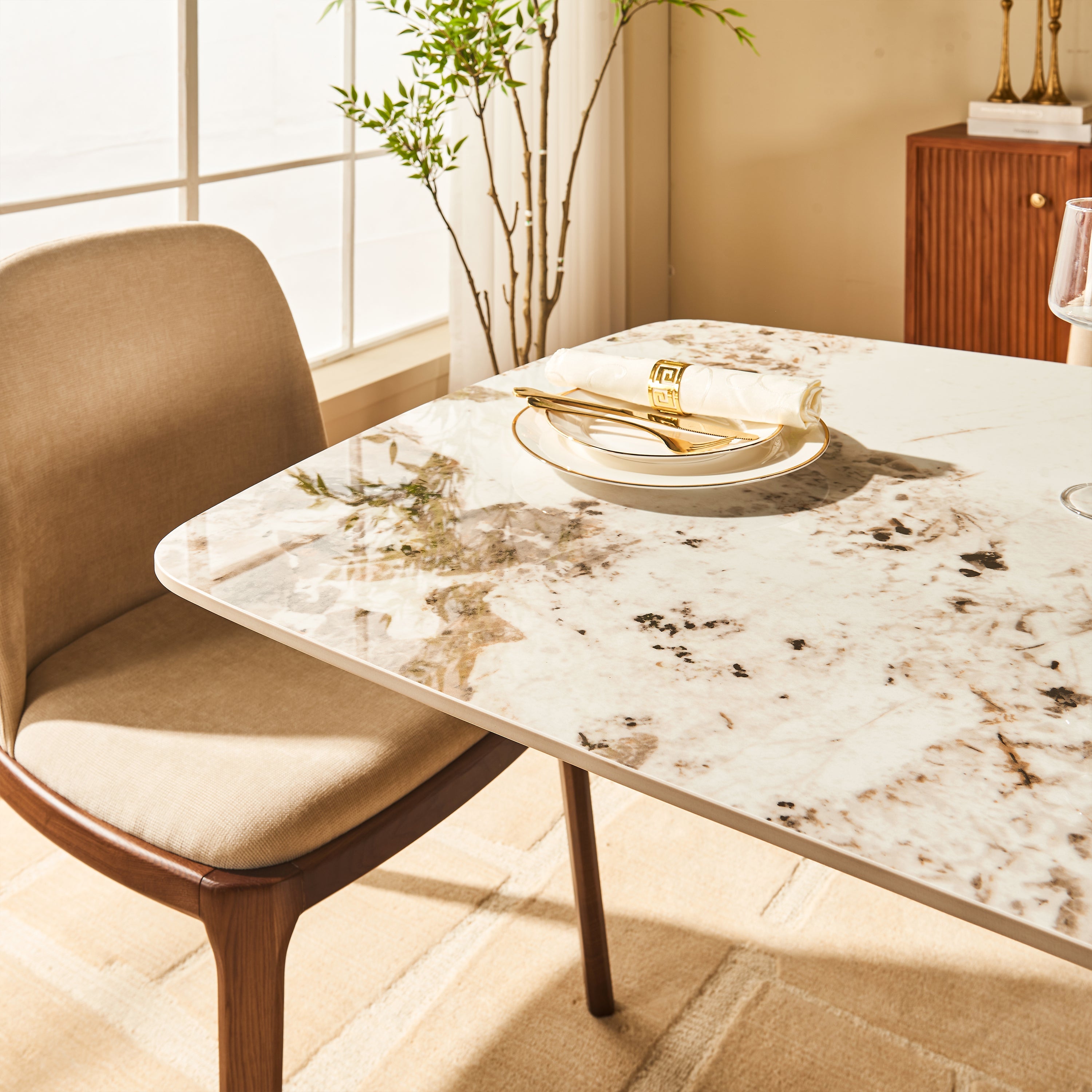
In an open-concept home, the dining table is visible from the kitchen, living room, and sometimes even the entryway. That means the material needs to work harder. Wood adds warmth and helps the dining area feel grounded. Sintered stone brings a cleaner, more contemporary surface that pairs well with modern cabinetry and sleek kitchen finishes.
Details also matter. A starburst wood top, sculptural pedestal, fluted base, or architectural leg shape can make the table feel intentional from across the room.
Wood dining tables help open layouts feel less cold and more connected to everyday living.
Sintered stone works well when the dining table needs to feel sleek, durable, and contemporary.
Since open-concept dining tables are seen from multiple angles, the base matters almost as much as the tabletop. Choose a table that looks finished from the side, back, and front.
A dining table should define the eating area without cutting the open plan in half. The goal is to create a sense of place while keeping the view and movement natural.
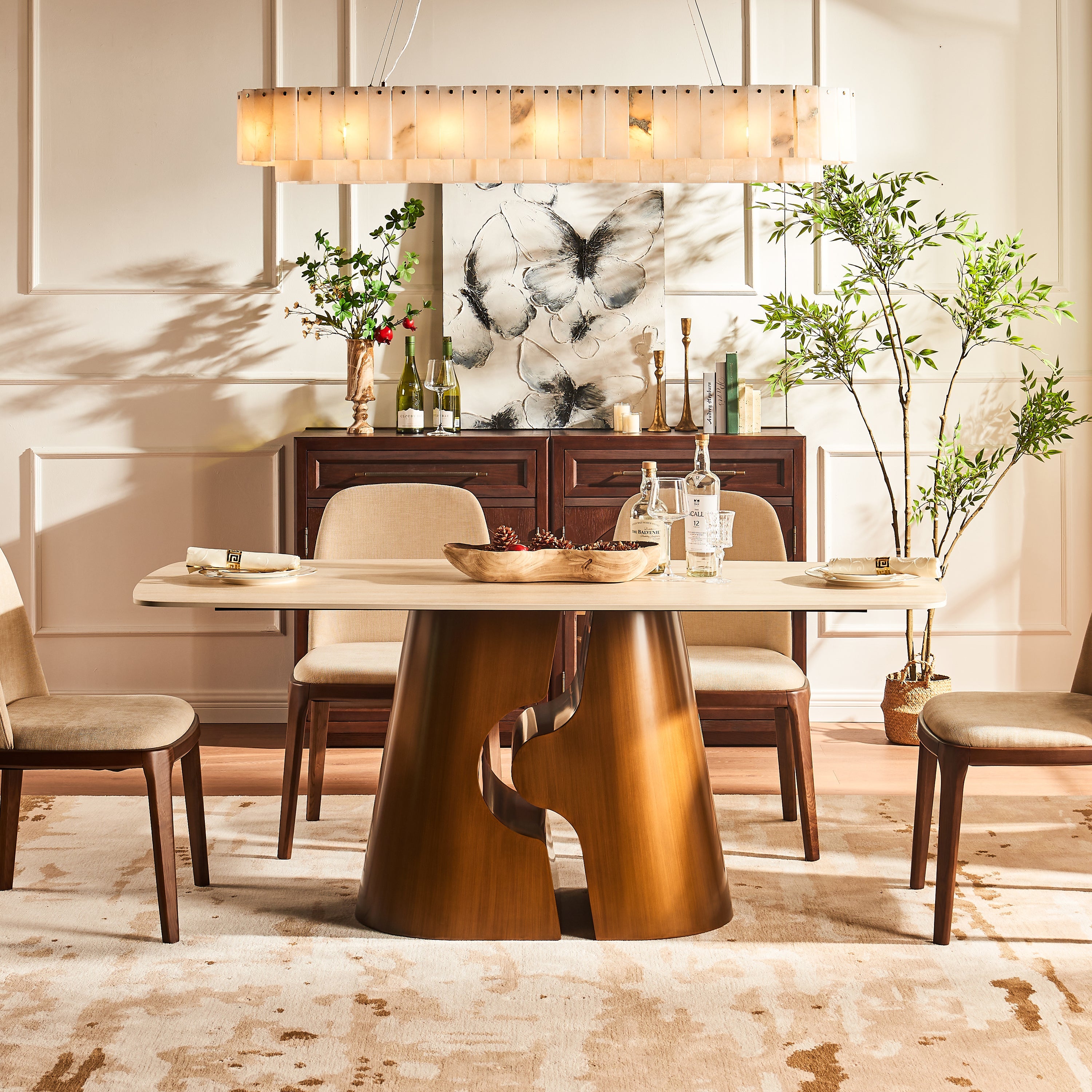
These three dining tables show different ways to define an open dining zone: a large oak table for structure, a sintered stone table for modern polish, and a round fluted table for softer flow.
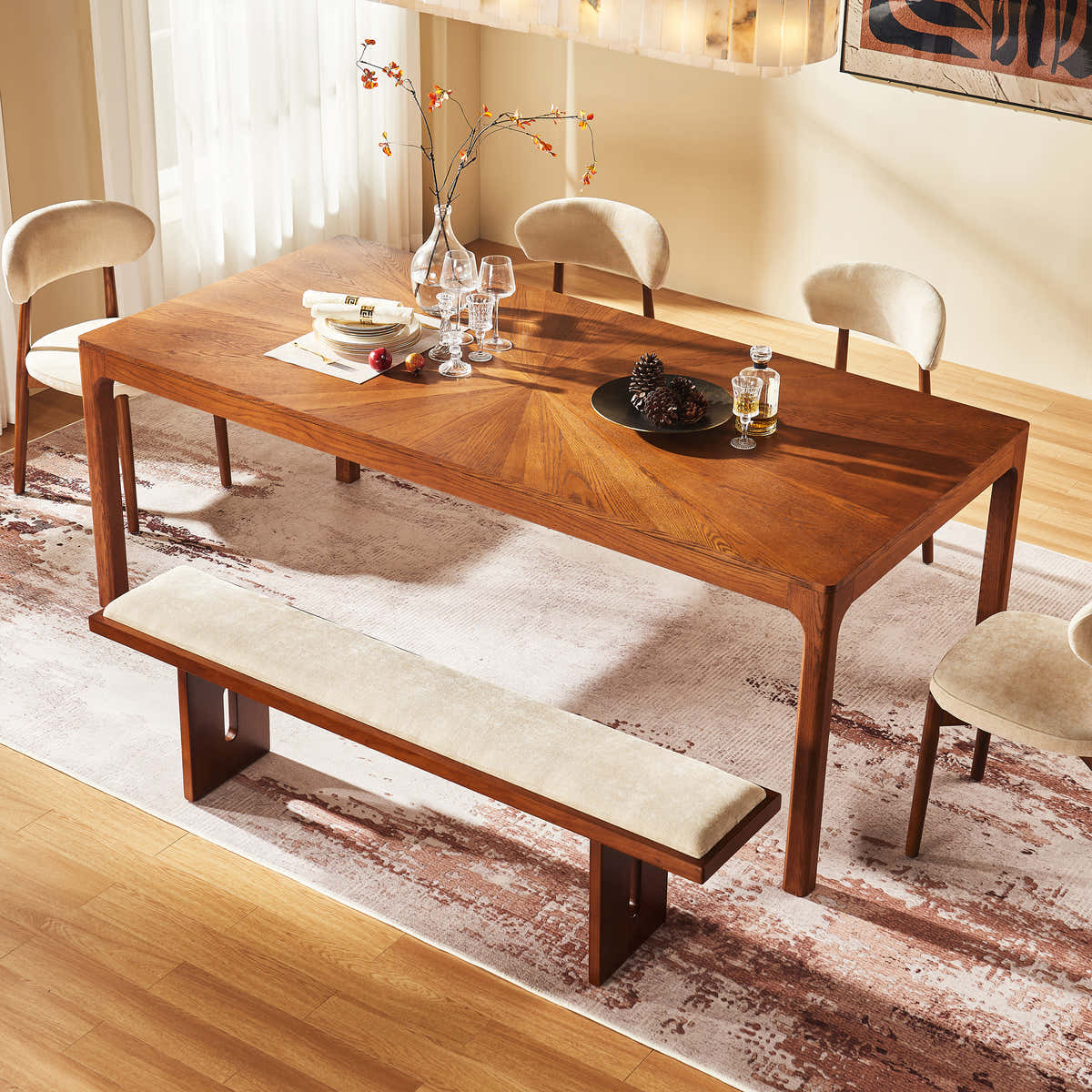
Solaris is a strong option for open-concept homes because its 84" width gives the dining area enough presence to feel anchored. The handcrafted starburst top adds visual detail, while the rectangular form creates a clear dining zone between the kitchen and living area.
This is especially useful when the dining table needs to function as both a daily family table and a hosting centerpiece.
View product →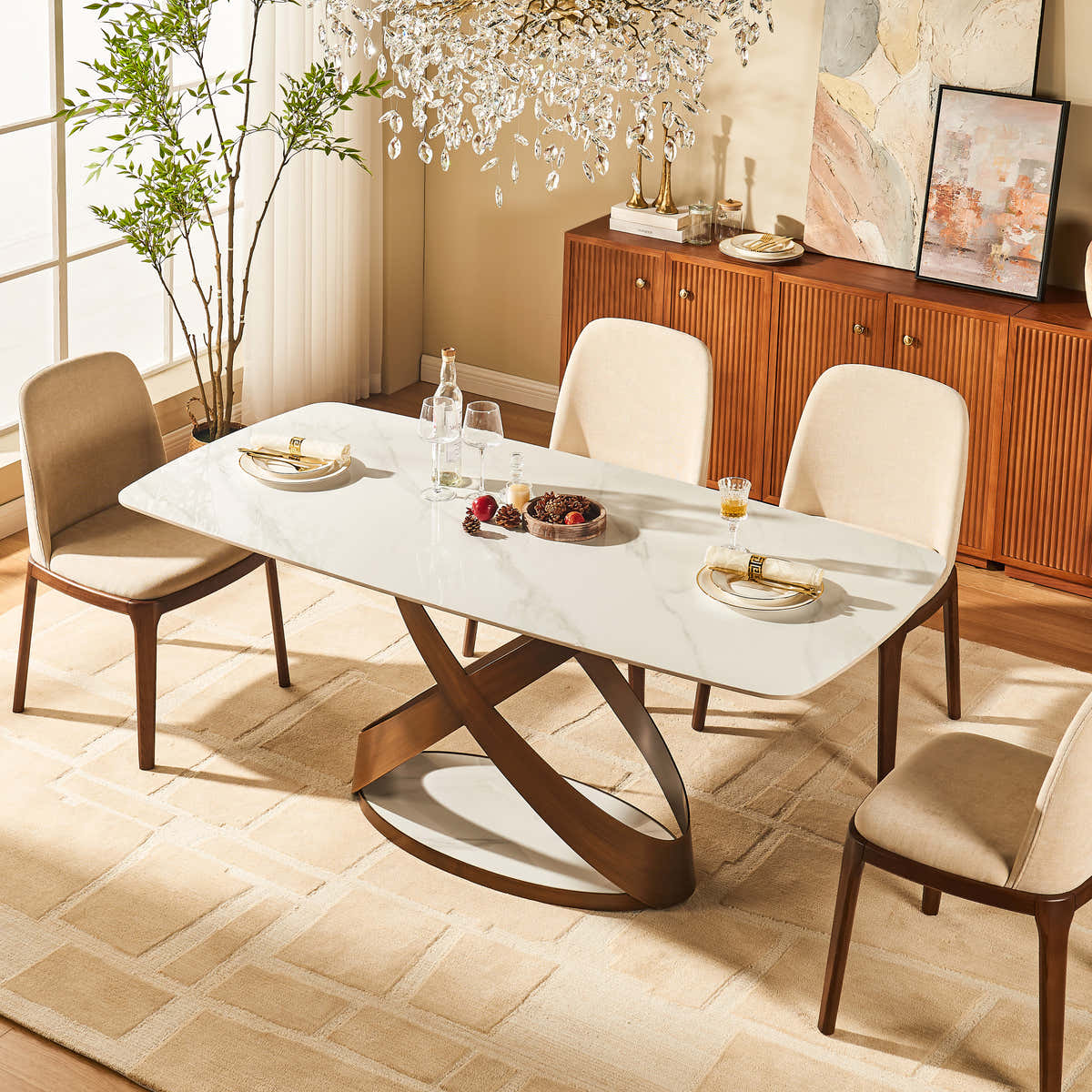
Koda works well in open layouts where the dining table is close to a modern kitchen. Its sintered stone top creates a sleek surface, while the carbon steel base gives the table a clean architectural presence.
View product →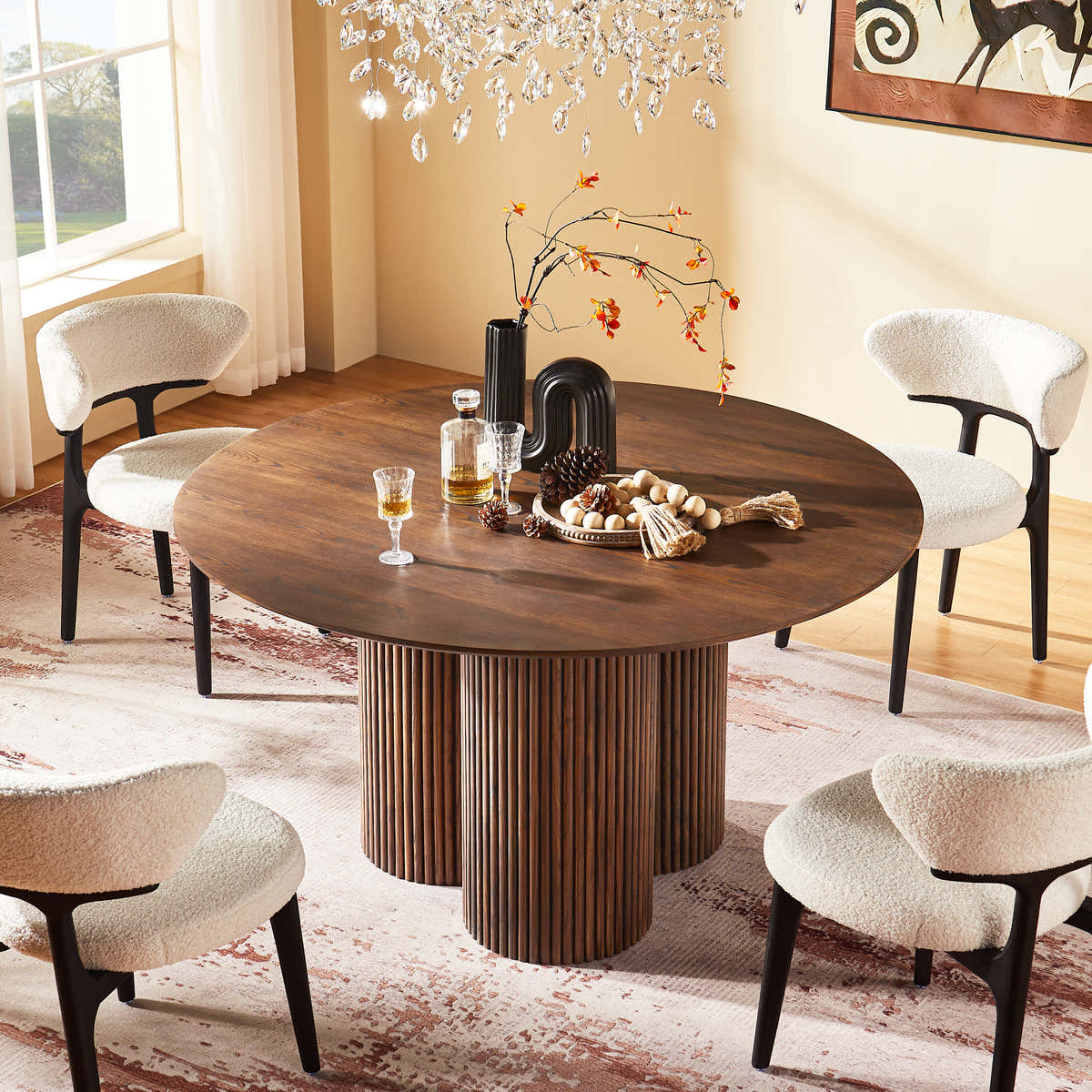
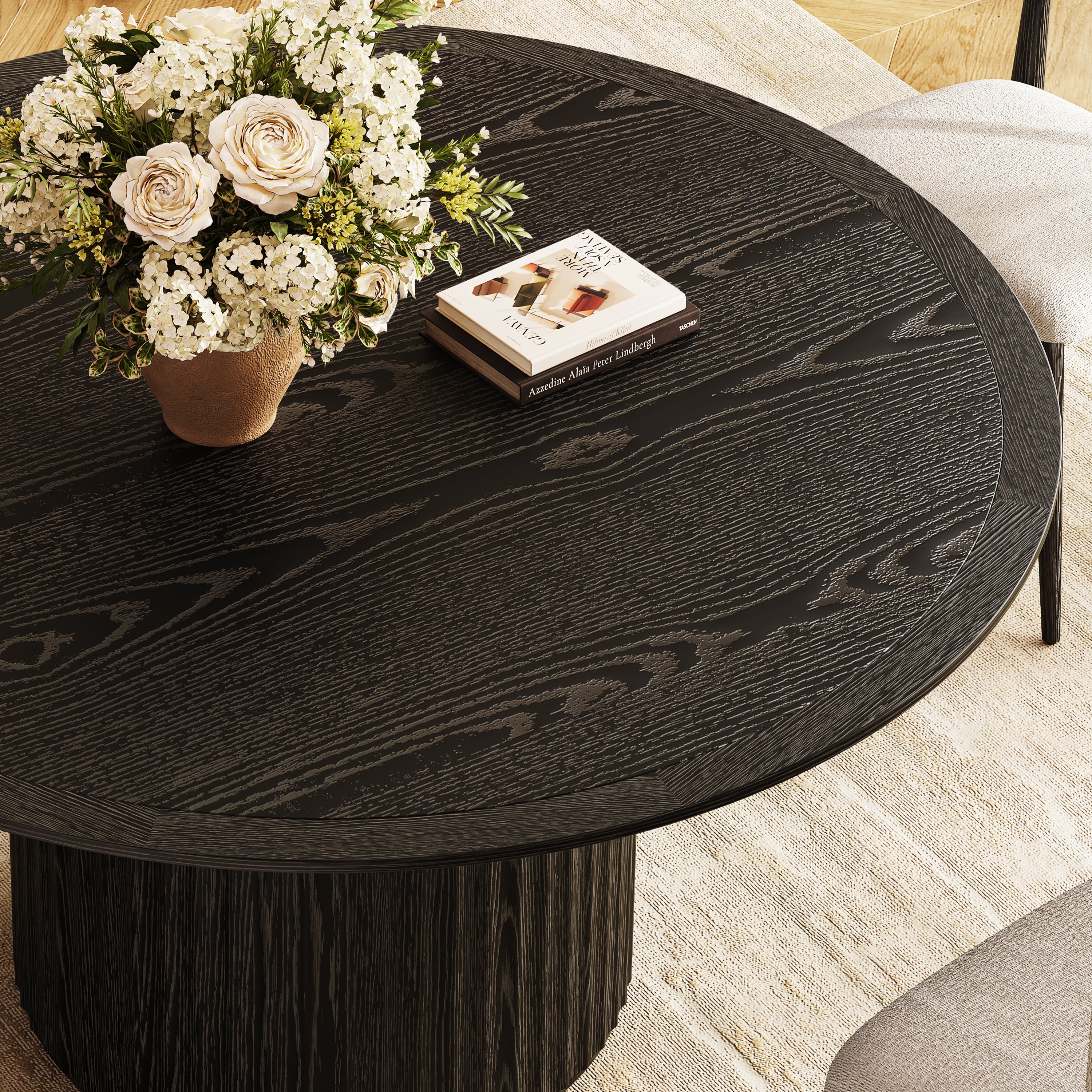
Doric is a good choice when an open-concept dining area needs a softer shape. The 54" round top helps people move around the space more easily, while the fluted base gives the table enough sculptural presence to feel intentional.
View product →Rectangular dining tables are best for defining a larger dining zone, while round dining tables work well when you want softer traffic flow and a more conversational layout.
Use a properly scaled dining table, a rug, and a chandelier or pendant light to visually define the dining area without adding walls.
Yes. Round dining tables can work well in open-concept spaces because they soften movement and reduce sharp corners, especially in smaller or square dining zones.
Wood works well when you want warmth and grounding, while sintered stone works well for a sleek, modern dining area that connects visually with contemporary kitchens.
In an open-concept home, the dining table should do more than fill space. It should define the dining zone, support movement, and connect the kitchen and living areas with a clear sense of purpose.
Whether you choose a large rectangular oak table, a sleek sintered stone design, or a round pedestal table, the best option is the one that makes the open plan feel balanced and livable.
Explore Dining Tables →

Share:
How to Choose a Dining Table Material That Lasts for Years
Best Wood Console Tables for a Warm and Welcoming Entryway