













































FSC FCOC47059 . FSC is dedicated to the promotion of responsible forest management
worldwide. By selecting this product, you help take care of the woorld's forests

UL-certified for indoor drying environments not directly exposed to excessive moisture or water;
Use in the United States and Canada.

Certified to Dry ETL electrical standard: suitable for use indoors in dry locations not directly exposed to excessive moisture and water
Use in the United States

CE-certified drying equipment compliant with electrical standards: Suitable for indoor drying environments not directly exposed to excessive moisture or water;
Tested for use in Europe, the UK, and other regions.


The support center has answers to questions you may have. You can also contact customer service in the support center if you can't find what you're looking for.
Support Center >
At houlte, we are committed to delivering quality, style, and great value to our customers. Our goal is to simplify your shopping experience by providing competitive prices and exceptional service.

If an item you purchased from houlte goes on sale on our website within 30 days of your purchase date, you may request a price match. This policy ensures you always receive the best value when shopping with us.
Houlte reserves the right to interpret and adjust the terms of the Price Match Policy as necessary.
Houlte has partnered with Taskrabbit to make your everyday life at home easier by connecting you with flexible and affordable ways to get your to-do’s done including furniture assembly and mounting.

1. Purchase your furniture at Houlte.
2. Check your order Dispatched and Delivered email and click the
Houlte link. You will be redirected to Taskrabbit's landing page.
3. Post your task on Taskrabbit platform.
4. Pick the best tasker to assemble your furniture.
Houlte has partnered with Taskrabbit to make your everyday life at home easier by connecting you with flexible and affordable ways to get your to-do’s done including furniture assembly and mounting.
Taskrabbit Assembly is available in most metro areas in the US. The availability of Taskers varies based on demand. When placing an order on Taskrabbit, you will need to enter your zip code. If the service is not supported in your area, you will not be able to place an order.
You can book assembly for your Houlte furniture as early as the next day after your delivery, and up to 14 days in advance, giving you flexibility to choose a time that works best for you.

Ready to use out of the box; minimal installation may be required (e.g., handles).

Main structure is pre-built; minor components require attachment (e.g., legs).

Assembly required; multiple parts must be assembled before use.
Our furniture is built with a combination of core boards, real wood veneers, and selected solid wood parts. Each material is used for a different purpose—structure, surface appearance, or visible strength—so the final piece feels balanced in performance, finish, and cost.
Core boards form the internal foundation of the furniture. They provide structure, stability, and efficiency across large surfaces and cabinet bodies.

Stable structural board

Smooth and consistent

Functional internal board
Selected solid wood parts are used where visible strength, tactile quality, and structural integrity matter most—such as legs, frames, trim, and exposed support details.

Durable and classic

Light and versatile

Premium and elevated
The biggest mistake people make when storing an artificial tree is treating it like a regular box item: cram it, squash it, forget it. That’s how branches get flattened, leaves crease, and the tree loses that airy, premium silhouette.
The good news: storing your faux tree properly doesn’t take special equipment or a giant storage room. With a few simple steps, you can keep it clean, shaped, and ready to style—so it looks great the moment you bring it out again.
The 15-second takeaway
Dust first → bundle branches loosely → use a breathable cover → store upright when possible → avoid heat + heavy pressure.
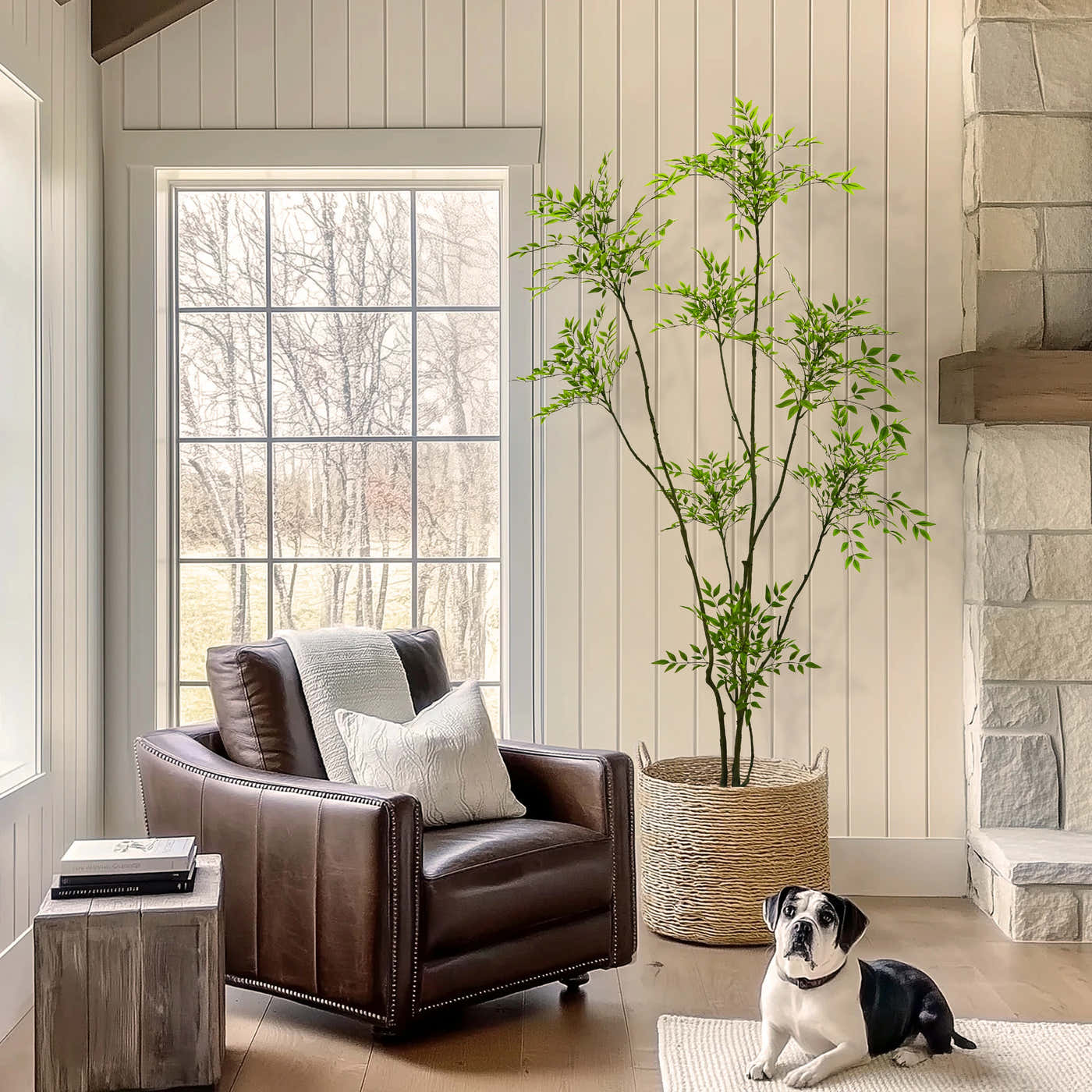
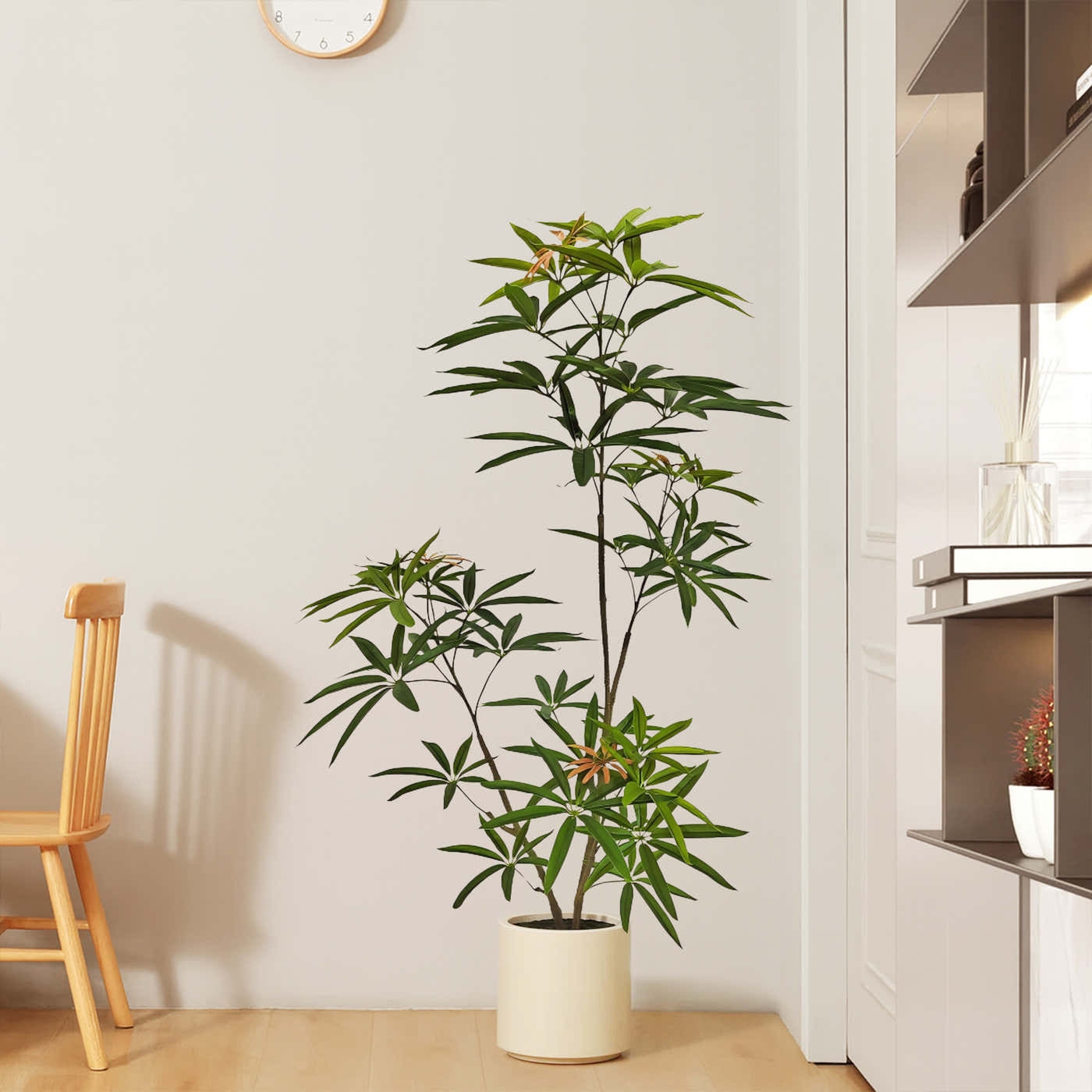
You don’t need specialized storage kits to keep your artificial tree looking great. What you need is simple: keep it clean, keep it supported, and keep it uncrushed.
Microfiber cloth or soft duster
Dust is the #1 “aging effect” on faux greenery. Remove it before storage so it doesn’t settle into creases.
Soft ties (fabric ties, velcro straps, or ribbon)
Avoid harsh zip ties that pinch branches. You want gentle bundling, not compression.
Breathable cover or roomy bag
Plastic wraps can trap moisture or odors. A breathable cover keeps dust off without sealing everything in.
Optional but helpful: a large reusable bag, a tall closet corner, or a clean storage container that’s big enough to avoid crushing the tree’s shape.
Storage is where dust quietly becomes “permanent.” If you put a tree away dusty, you’ll often pull it out with a dull finish—especially on detailed leaves. Clean first so your tree looks fresh immediately when it returns.
If your tree sits near a kitchen or high-traffic area, the leaves can collect a subtle film over time. In that case, a lightly damp cloth (not soaking) can help—then let the tree air dry before covering it.

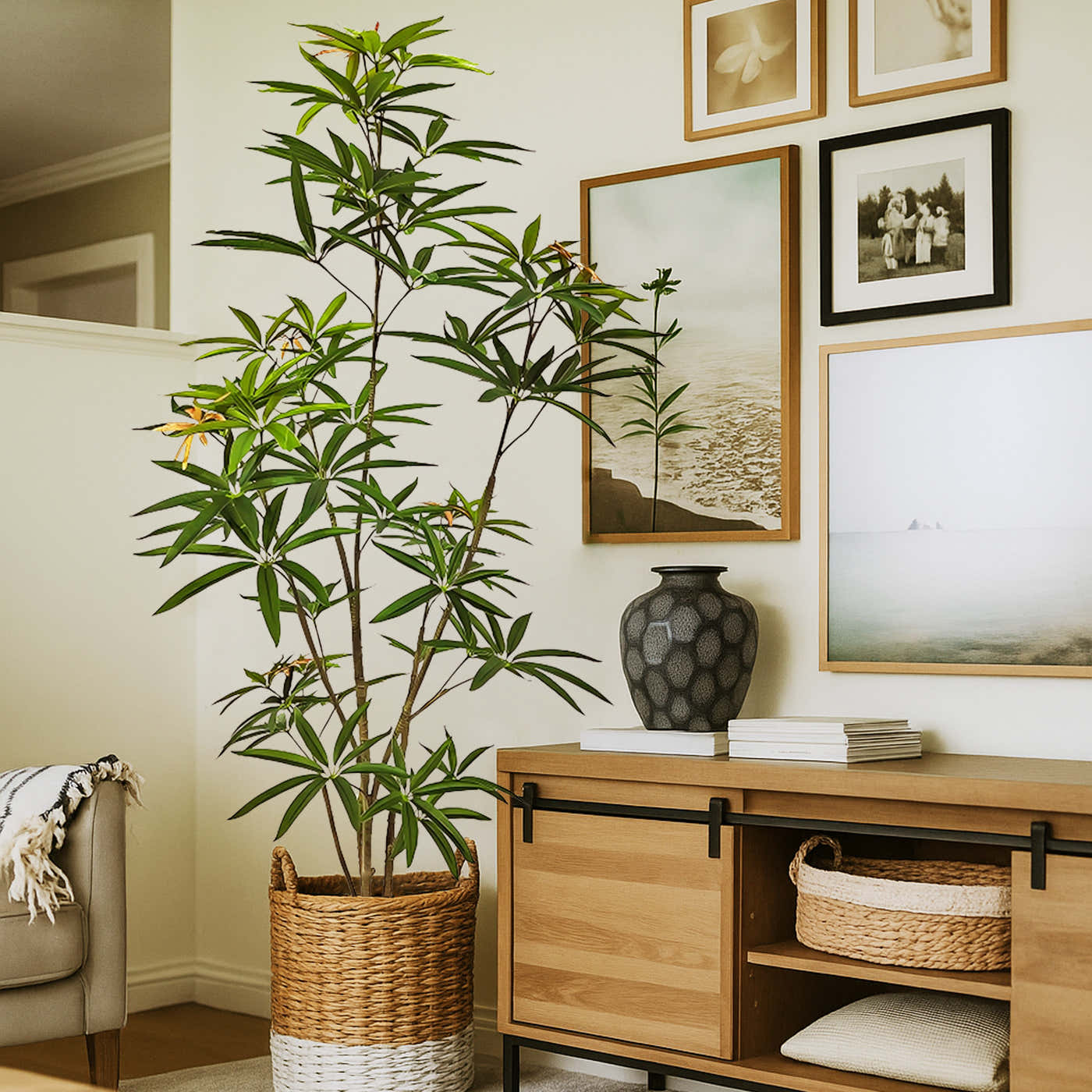
The goal is simple: keep the branches from snagging and keep the leaves from being flattened under pressure. Most “storage damage” isn’t permanent damage—it’s just compression that takes time to fix.
Step A: Fluff lightly, then bundle loosely
Don’t bundle the tree “tight.” Instead, gather branches inward gently so the tree becomes slimmer, but still airy.
Step B: Use soft ties in 2–3 zones
Tie near the upper third, midsection, and lower third. This keeps the silhouette together without bending branches sharply.
Step C: Wrap the canopy (optional)
A light fabric cover helps prevent snagging and dust buildup. Avoid tight plastic wrap that presses leaves flat.
If you store multiple home items nearby, the real enemy is pressure. A tree can handle gentle bundling—but it shouldn’t be stacked under heavy boxes or wedged into a narrow space.
The best storage setup depends on your space. But the rule is universal: roomy is better than tight. A slightly oversized container prevents crushed leaves and reduces “re-fluff time” later.
A soft-sided bag is easy to carry, easy to tuck into closets, and usually kinder to leaves than rigid boxes. Choose a size that doesn’t force you to compress the canopy.
Best for: frequent movers, apartment storage, and trees you want to keep “ready to go.”
A roomy bin works well if your storage area gets dusty. The key is size: if the lid forces leaves down, it will flatten the tree.
Best for: garages, basements, and long storage periods—only when you have a big enough container.
If you can store the tree upright in a closet corner, that’s the easiest way to preserve the silhouette. Cover it with a breathable cloth bag to prevent dust.
Best for: tall faux trees, premium leaf detail, and anyone who hates reshaping branches later.
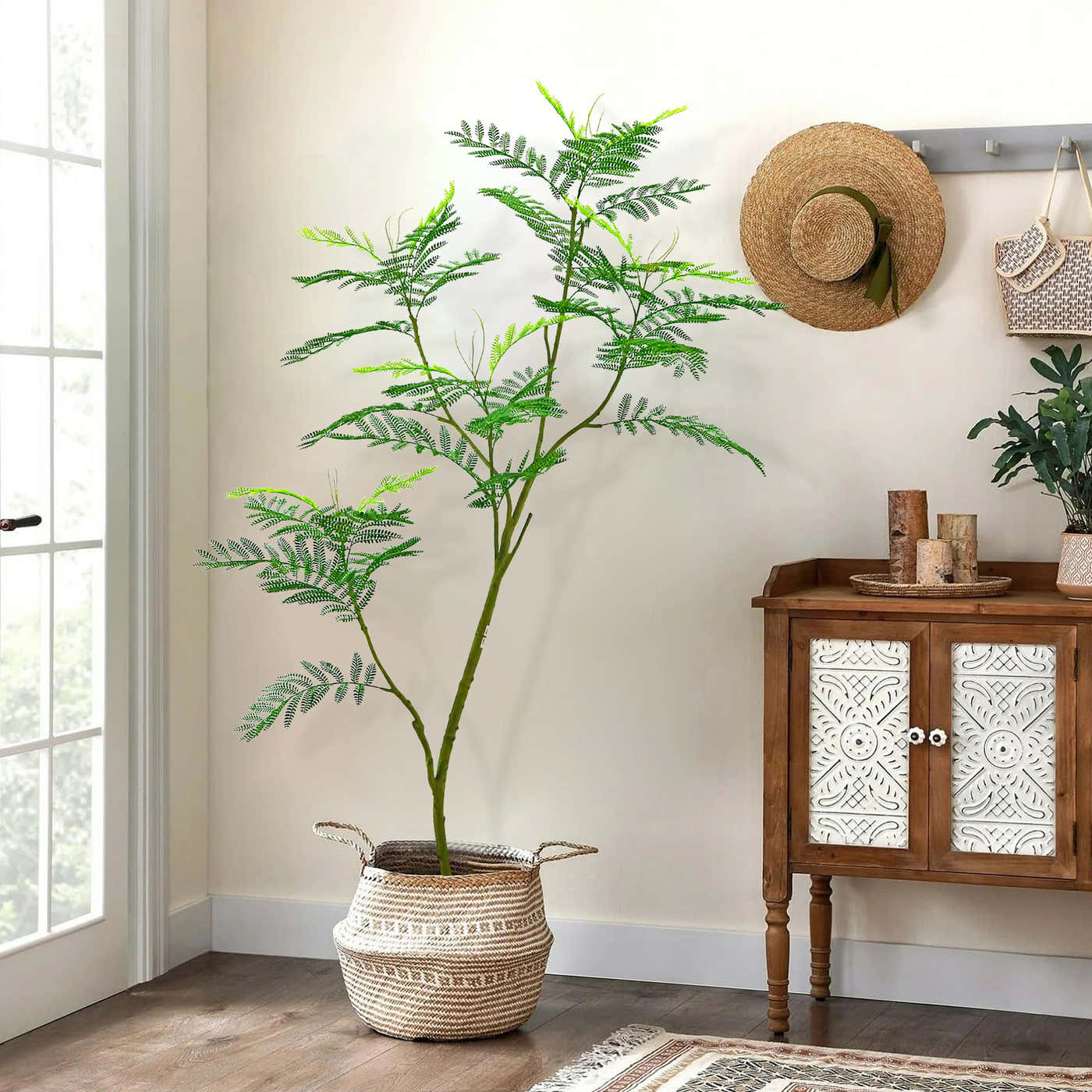
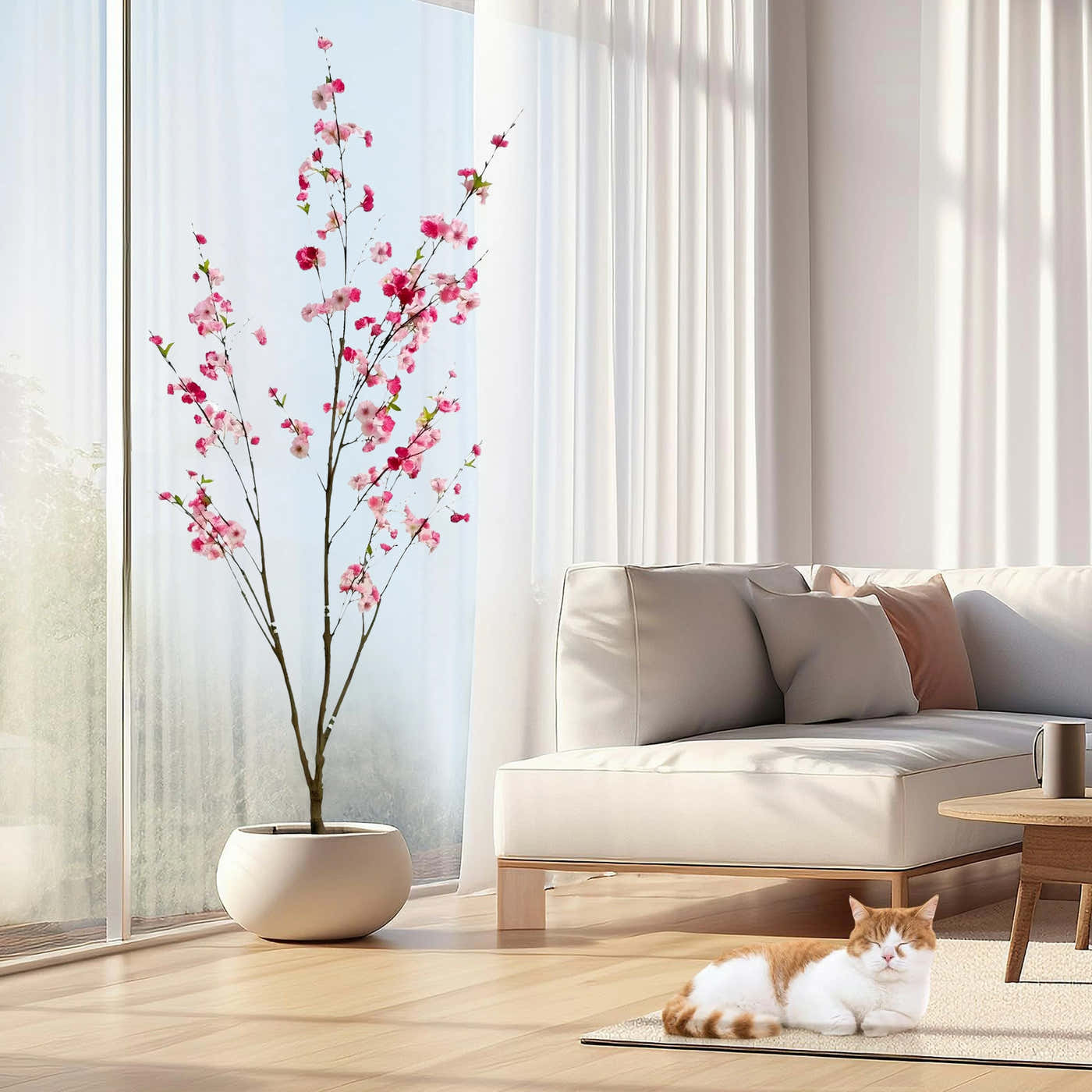
Height changes storage strategy. A compact tree can fit in more places, while tall trees benefit from upright storage to keep the canopy shape intact.
4ft artificial trees (compact storage)
Bundle loosely and store in a breathable bag on a top shelf or closet floor. Avoid placing heavy items on top.
5ft artificial trees (most flexible)
Best stored in a large bag or roomy bin. If you have a closet corner, upright storage reduces reshaping time later.
6ft artificial trees (statement height)
Avoid tight bins. Use soft ties in 3 zones and store upright when possible. If stored horizontally, keep it on top of other items—not underneath.
7ft & tall artificial trees (best upright)
Upright storage is the premium option. It preserves leaf spacing, keeps the canopy airy, and prevents pressure marks.
Tall trees hate compression. Store them where they can “breathe,” and you’ll save time every time you bring them back out.
No garage? No storage room? You can still store an artificial tree safely. The trick is picking locations that keep it upright or lightly supported.
Closet corner
Stand the tree upright, cover with a breathable bag, and keep shoes or bags from leaning on the canopy.
Behind a sofa (temporary storage)
For short periods, a loosely bundled tree can sit upright behind a sofa as long as it isn’t pressed or bent.
Under-bed space (only for compact trees)
Works for smaller trees if you use a shallow bag and prevent anything heavy from stacking on top.
Inside a large travel bag
A clean oversized suitcase or duffel can act as a protective carrier—just avoid tight compression.
If space is tight, your priority should be: no bending and no stacking weight. Even a perfect bag won’t help if heavy storage boxes are pressing down on the leaves.
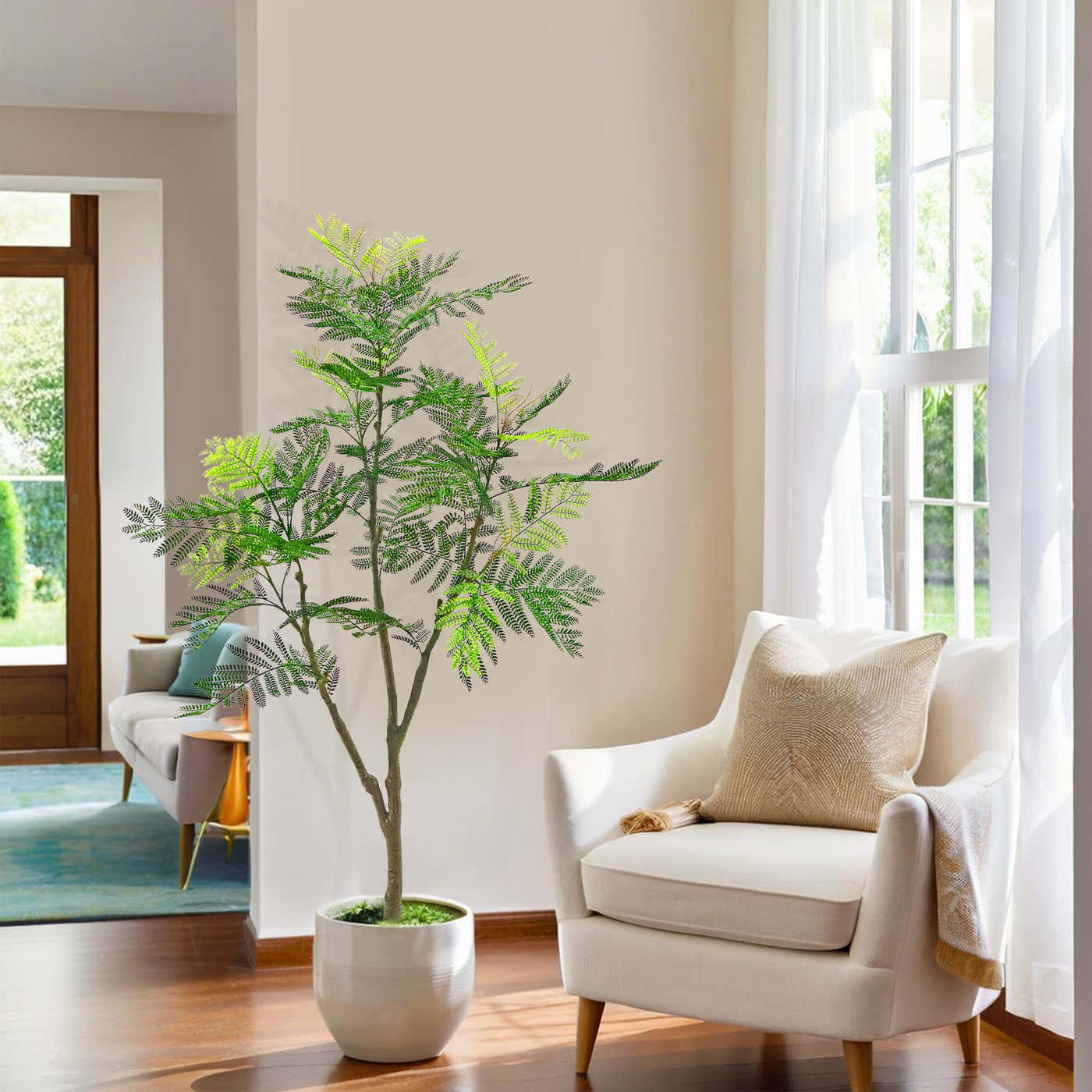
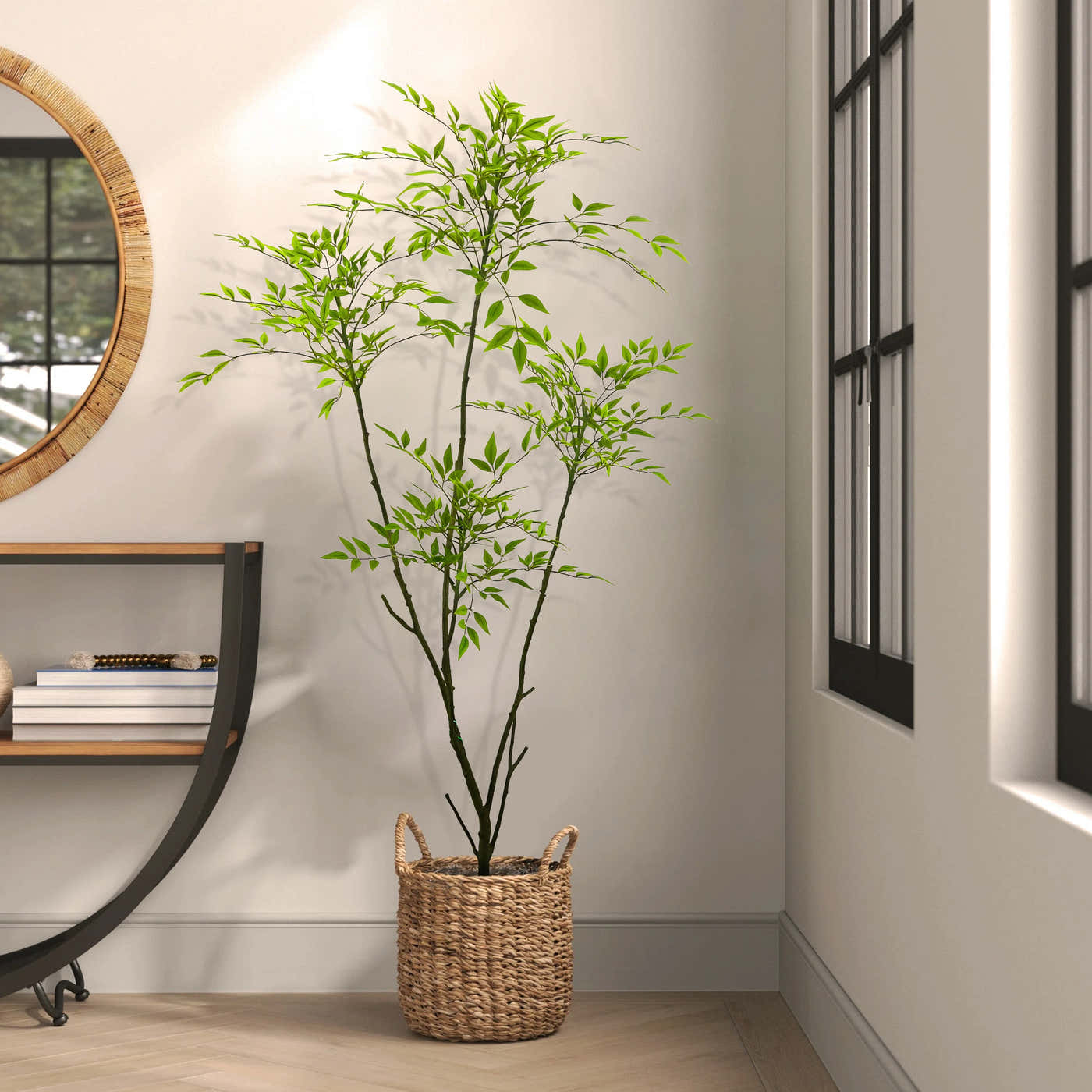
Most storage issues are predictable. Avoid these, and your artificial tree stays fuller, cleaner, and easier to style.
1) Tight compression
Stuffing a tree into a small box flattens leaves and creates creases that take time to reshape.
2) Heat exposure
Avoid direct heat sources and hot, closed spaces. Heat can soften or warp materials over long periods.
3) Trapped moisture
Don’t wrap tightly in plastic after cleaning. Let it fully dry before covering to prevent odors.
4) Heavy stacking on top
Storage boxes compress branches slowly over time. Keep trees on top, not at the bottom.
5) Harsh ties that pinch branches
Tight zip ties can create dents and bend points. Always use soft ties and keep them snug—not tight.
If your tree has premium leaf detail, it’s worth storing with extra care. The better the silhouette, the more “realistic” it looks in a room—and that’s exactly what you want to preserve.
Even with great storage, you’ll usually want a quick “refresh” when you bring it back out. The goal is to recreate a natural silhouette—airy, layered, and not perfectly symmetrical.
If a branch looks flattened, don’t force it into position immediately. Open it gently over time. Small adjustments create a more natural result than one aggressive reshaping session.
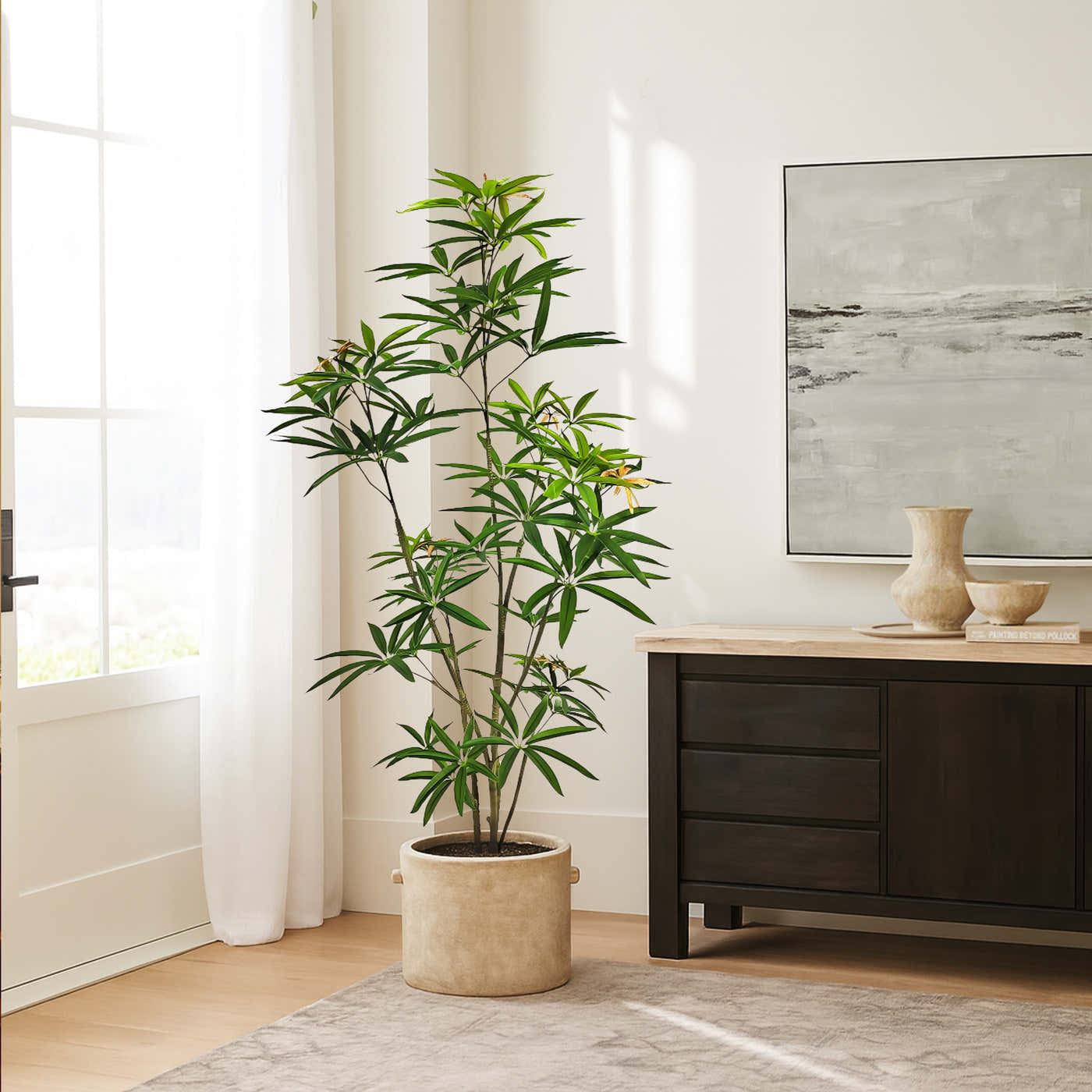
If you want to store your artificial tree the right way every time, follow this exact sequence:
Dust top-to-bottom
Dust before storage so it stays crisp and clean when you bring it back out.
Bundle loosely with soft ties
2–3 tie zones. Keep it supported, not compressed.
Use a breathable cover
Keep dust out while avoiding trapped moisture and odors.
Store upright when possible
Best for tall trees: preserves canopy spacing and saves reshaping time later.
Avoid heat and heavy stacking
Compression + heat is the fastest way to flatten branches and dull the finish.
Want a tree that’s easy to style every time?
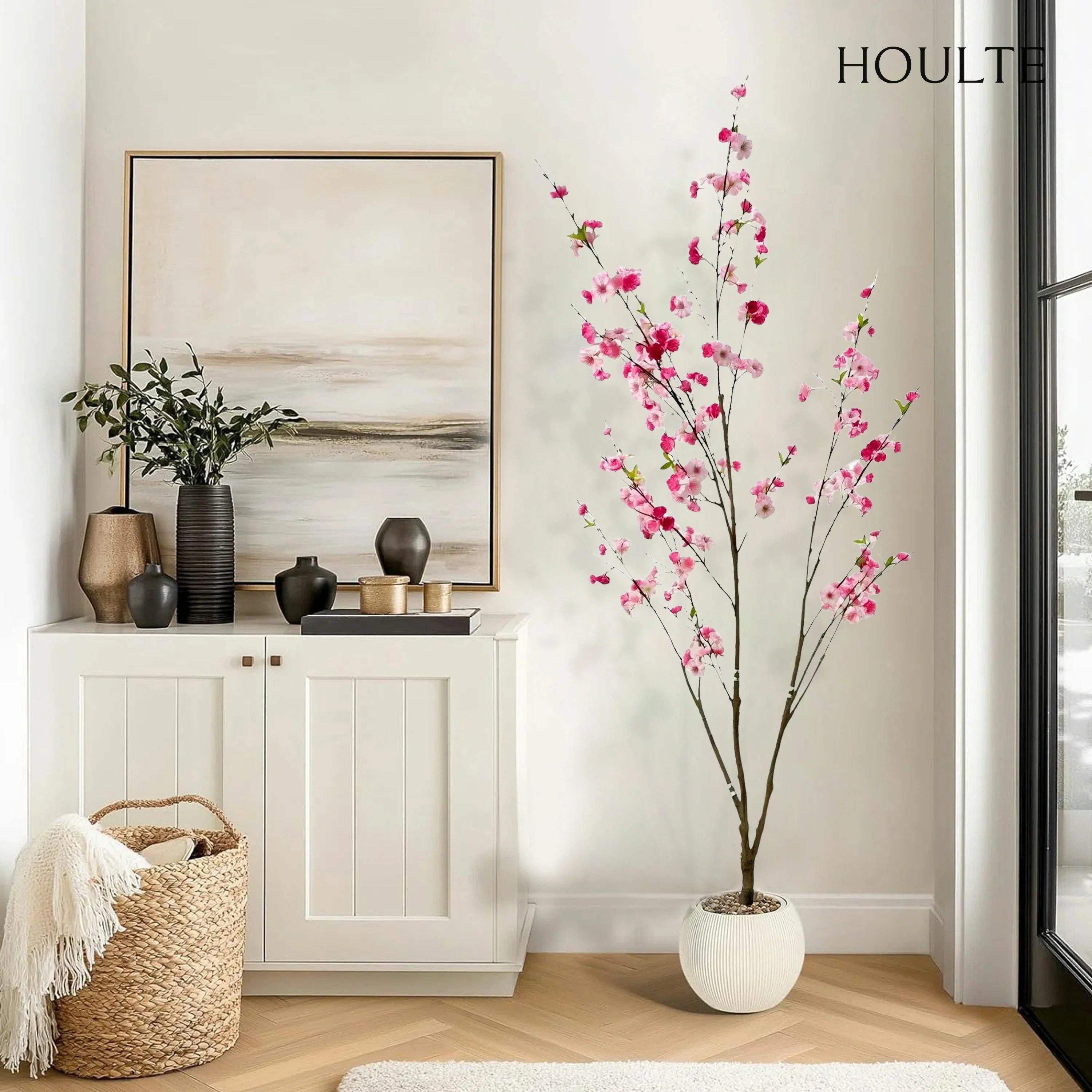
Explore HOULTE artificial trees designed to look full, balanced, and premium—so your room feels finished instantly.
Shop HOULTE TreesThese are the most common questions shoppers ask when they want their artificial tree to stay full, clean, and easy to use again.
HOULTE artificial trees are made to look balanced, full, and premium—so your space feels styled instantly. Choose your height, place it once, and enjoy effortless “finished room” energy every day.



Share:
How Tall Should a Side Table Be? A Complete Height Guide for Sofas, Chairs & Beds
how to make an artificial tree look fuller